Showing posts with label Genome. Show all posts
Showing posts with label Genome. Show all posts
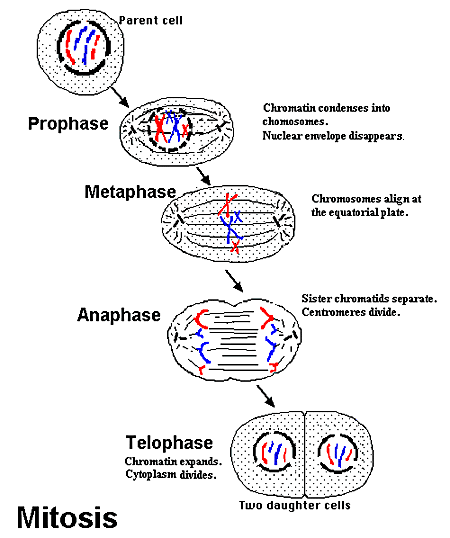
Mitosis

Tumor

A neoplasm can be caused an abnormal proliferation of tissues, which can be caused by genetic mutations. Not all types of neoplasms cause a tumorous overgrowth of tissue, however (such as leukemia or carcinoma in situ).
Ancient DNA

Heredity

In humans, eye color is an inherited characteristic and an individual might inherit the "brown-eye trait" from one of the parents. Inherited traits are controlled by genes and the complete set of genes within an organism's genome is called its genotype.
Nucleotide

Nucleotide derivatives such as the nucleoside triphosphates play central roles in metabolism, in which capacity they serve as sources of chemical energy (ATP and GTP).
T Cell

T helper cell (TH cells) assist other white blood cells in immunologic processes, including maturation of B cells into plasma cells and memory B cells, and activation of cytotoxic T cells and macrophages. These cells are also known as CD4+ T cells because they express the CD4 protein on their surface.
Human Leukocyte Antigen

The HLA genes are the human versions of the MHC genes that are found in most vertebrates. The proteins encoded by certain genes are also known as antigens, as a result of their historic discovery as factors in organ transplants. The major HLA antigens are essential elements for immune function.
Antigen

These invaders can be molecules such as pollen or cells such as bacteria. The term originally came from antibody generator and was a molecule that binds specifically to an antibody, but the term now also refers to any molecule or molecular fragment that can be bound by a major histocompatibility complex (MHC) and presented to a T-cell receptor. "Self" antigens are usually tolerated by the immune system; whereas "Non-self" antigens are identified as intruders and attacked by the immune system. Autoimmune disorders arise from the immune system reacting to its own antigens.
Antibody

Each tip of the "Y" of an antibody contains a paratope (a structure analogous to a lock) that is specific for one particular epitope (similarly analogous to a key) on an antigen, allowing these two structures to bind together with precision. Using this binding mechanism, an antibody can tag a microbe or an infected cell for attack by other parts of the immune system, or can neutralize its target directly.
Transduction

When bacteriophages (viruses that infect bacteria) infect a bacterial cell, their normal mode of reproduction is to harness the replicational, transcriptional, and translation machinery of the host bacterial cell to make numerous virions, or complete viral particles, including the viral DNA or RNA and the protein coat. Transduction and specialized transduction is especially important because they explain how anti-biotic drugs become ineffective due to the transfer of resistant genes between bacteria.
Transformation
In molecular biology transformation is the genetic alteration of a cell resulting from the direct uptake, incorporation and expression of exogenous genetic material (exogenous DNA) from its surrounding and taken up through the cell membrane. Transformation occurs most commonly in bacteria and in some species occurs naturally. Transformation can also be effected by artificial means. Bacteria that are capable of being transformed, whether naturally or artificially, are called competent.
Transformation is one of three processes by which exogenous genetic material may be introduced into a bacterial cell, the other two being conjugation (transfer of genetic material between two bacterial cells in direct contact), and transduction (injection of foreign DNA by a bacteriophage virus into the host bacterium).
Down Syndrome
Down syndrome is a chromosomal condition caused by the presence of all or part of an extra 21st chromosome. It is named after John Langdon Down, the British physician who described the syndrome in 1866. The condition was clinically described earlier in the 19th century by Jean Etienne Dominique Esquirol in 1838 and Edouard Seguin in 1844.
The effects and extent of the extra copy vary greatly among people, depending on genetic history, and pure chance. The incidence of Down syndrome is estimated at 1 per 733 births, although it is statistically more common with older parents (both mothers and fathers) due to increased mutagenic exposures upon some older parents reproductive cells. Down syndrome occurs in all human populations, and analogous effects have been found in other species such as chimpanzees and mice.
Transfection

Genetic material (such as supercoiled plasmid DNA or siRNA constructs), or even proteins such as antibodies, may be transfected.
Type of Mutation
Mutations are changes that occur in genetic material (DNA or RNA), both at the level of gene sequences (point mutations) or at the level of chromosomes. Mutations at the chromosomal level are usually called aberration. Mutations in the gene may lead to the emergence of new alleles and the basis for the emergence of new variations on the species.
Several examples of mutations:
Somatic mutations are mutations in somatic cells, such as skin cells. These mutations are not inherited in the offspring. Gamete mutations are mutations that occur in gamete cells, such as cells of the reproductive organs including sperm and ovum in humans. Because of the gamete cells, it will be passed on to offspring.
DNA Function
DNA usually occurs as linear chromosomes in eukaryotes, and circular chromosomes in prokaryotes. The set of chromosomes in a cell makes up its genome; the human genome has approximately 3 billion base pairs of DNA arranged into 46 chromosomes. The information carried by DNA is held in the sequence of pieces of DNA called genes.
Transmission of genetic information in genes is achieved via complementary base pairing. For example, in transcription, when a cell uses the information in a gene, the DNA sequence is copied into a complementary RNA sequence through the attraction between the DNA and the correct RNA nucleotides.
Pyrimidine

Pyrimidine is a heterocyclic aromatic organic compound similar to benzene and pyridine, containing two nitrogen atoms at positions one and three of the six-member ring. Heterocyclic compounds are organic compounds that contain a ring structure containing atoms in addition to carbon such as sulfur, oxygen or nitrogen as part of the ring.
Pyrimidines is also used in reference to pyrimidine derivatives and structurally related forms. Pyrimidine is very similar to pyridine, but has an extra nitrogen atom. Pyrimidine is isomeric with two other forms of diazine.
Guanine

With the formula C5H5N5O, guanine is a derivative of purine, consisting of a pyrimidine ring system fused with imidazole-conjugated double bonds. Being unsaturated, the bicyclic molecule is flat. The guanine nucleoside is called guanosine.
Cytosine

Cytosine was discovered by Albrecht Kossel in 1894 when it was hydrolysed from calf thymus tissues. A structure was proposed in 1903, and was synthesized (and thus confirmed) in the laboratory in the same year.
Ribosome

Nucleus

The main function of the nucleus is to maintain the integrity of genes and controlling cell activity by managing gene expression. In addition, the nucleus also serves to organize the genes during cell division, producing the mRNA to encode proteins, as a synthesis of ribosome, the site of replication and transcription of DNA, and regulate when and where gene expression must be initiated, executed, and terminated.
Subscribe to:
Posts (Atom)